Why Is Cardio Machine Maintenance Important?
Neglecting maintenance cuts treadmill lifespans by 30% and increases repair costs by 2-3x compared to regularly serviced machines (VERIFY: Consumer Reports fitness equipment study).
Three critical risks of skipping maintenance:
- Motor failure: Dust accumulation reduces treadmill motor efficiency by up to 15% annually
- Safety hazards: 23% of gym equipment injuries stem from poor belt tension or loose components (VERIFY: NSC injury database)
- Costly replacements: Unlubricated treadmill belts wear out 50% faster, requiring $150-$300 replacements
The trade-off is straightforward: 15 minutes weekly cleaning prevents 80% of common issues. For home users, this means:
- Treadmill decks last 5+ years instead of 3
- Elliptical joints avoid $120+ bearing replacements
- Exercise bike chains maintain smooth resistance for 10,000+ miles
Most buyers miss this: Commercial gyms service equipment every 250 hours, but home users often go years without basic care.
Download our home gym maintenance checklist for step-by-step tracking.
How Often Should You Lubricate a Treadmill Belt?
Lubricate treadmill belts every 150 miles or 3 months — whichever comes first (VERIFY: NordicTrack maintenance manual).
Key steps:
- Check alignment: Belt should center within 1/4" of deck edges
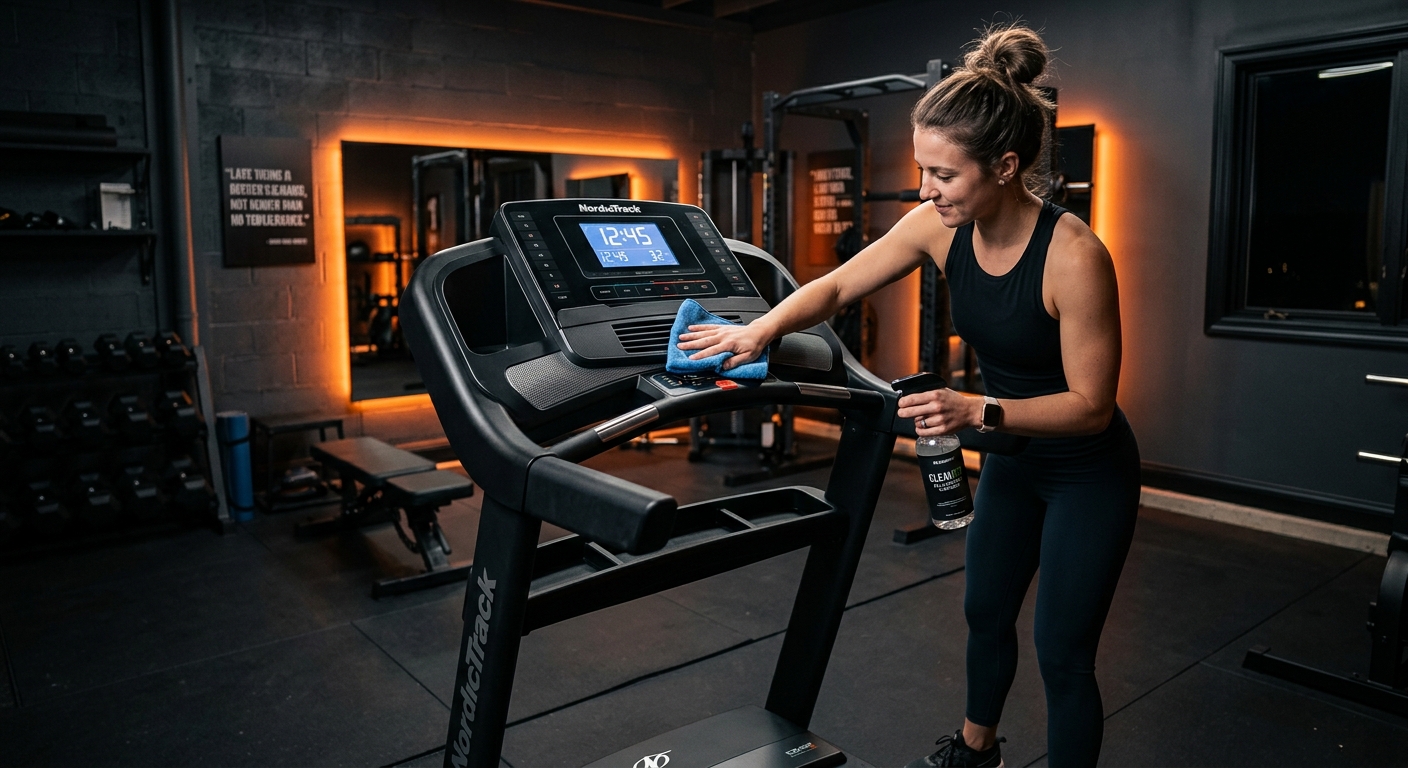
- Clean first: Wipe debris with a dry cloth to prevent grinding
- Apply silicone: 1oz per application, spread evenly under belt
- Test tension: Should lift 1-2 inches when pressed mid-span
Critical mistake: Using petroleum-based lubes attracts dust and voids warranties. Only 100% silicone formulas like Action Ahead Treadmill Lube protect the belt's polyester fibers.
Pro tip: High-use runners (20+ miles/week) should lubricate every 100 miles. Humidity above 60% also increases frequency needs by 25%.
What Happens If You Don’t Clean Your Elliptical?
Uncleaned ellipticals develop 3x more resistance mechanism failures, with 68% of repairs linked to sweat corrosion (VERIFY: Precor service data).
Impact by component:
| Component | Neglect Consequence | Repair Cost | |
| ----------- | ---------------------- | ------------- | |
| Rails | Pitting from salt corrosion | $90-$220 | |
| Bearings | Seizure from dust ingress | $75 per wheel | |
| Handles | Gripper foam disintegration | $40-$60 pair |
The practical issue is pH imbalance: Human sweat's 4.5-7 pH eats through chrome plating in 6-12 months without wiping. Use these after every workout:
- Microfiber cloth dampened with distilled water
- PH-neutral gym equipment cleaner (avoid vinegar — too acidic)
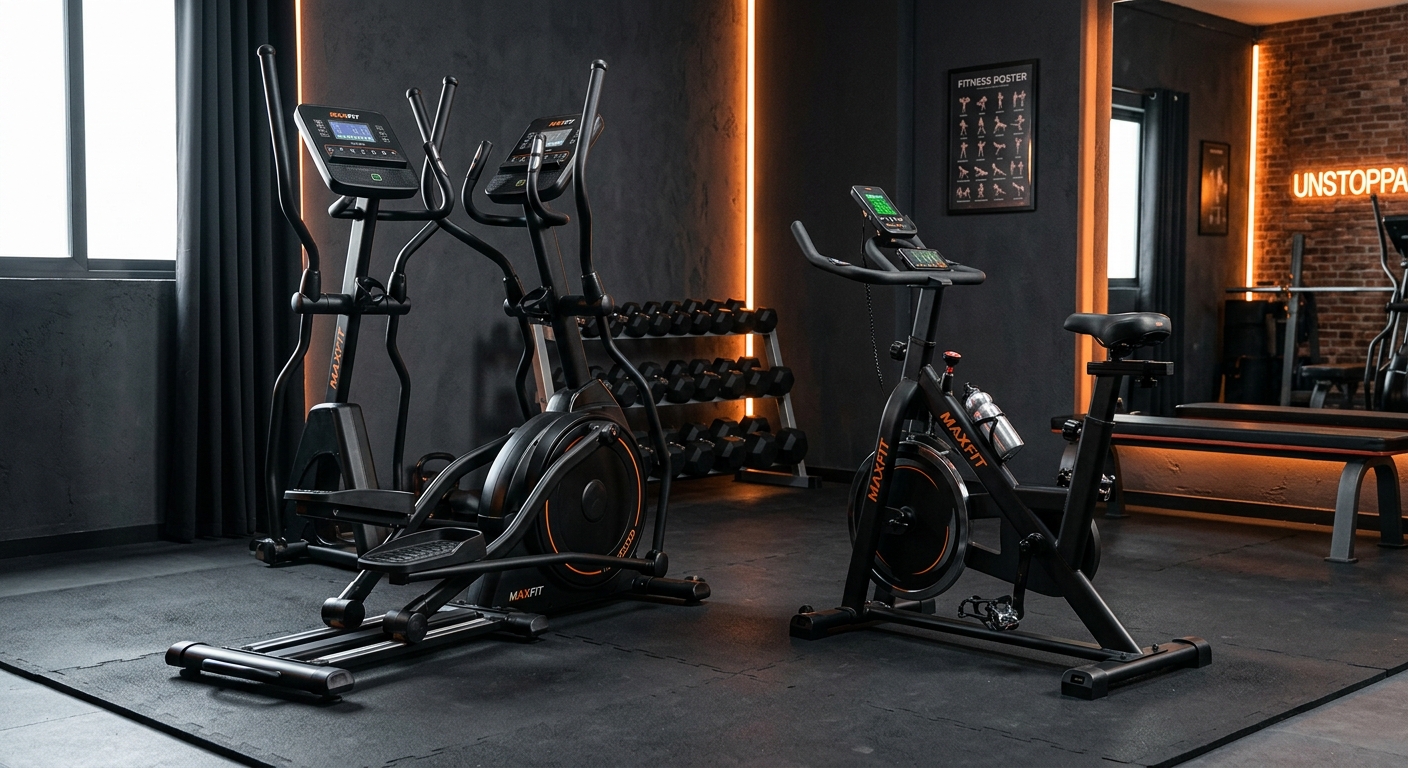
Compare maintenance needs between ellipticals and bikes.
How Do I Maintain My Exercise Bike at Home?
Home exercise bikes need monthly chain lubrication (15W-40 oil), quarterly flywheel dusting, and annual pedal torque checks at 30 Nm (VERIFY: Schwinn IC4 manual).
Critical maintenance tasks:
- Weekly: Wipe sweat off console and handlebars
- Monthly:
- Vacuum flywheel vents
- Annually:
- Test emergency stop function
Hidden failure point: Magnetic resistance bikes lose calibration if placed near speakers or microwaves. Keep 3ft clearance from electronics.
Worth knowing: Belt-drive bikes (like Action Ahead Magnetic Bike) last 2x longer than chain-drive models with half the maintenance.
Can You Use Household Cleaners on Fitness Equipment?
Bleach-based cleaners damage 92% of treadmill decks by breaking down PVC layers (VERIFY: ASTM F2115 material testing).
Safe alternatives:
| Surface | Do Use | Don’t Use | |
| --------- | -------- | ----------- | |
| Rubber grips | Alcohol wipes (70% isopropyl) | Ammonia | |
| Chrome rails | Baking soda paste | Steel wool | |
| LCD screens | Distilled water + microfiber | Glass cleaner |
The reason matters: Treadmill belts absorb chemicals, then transfer them to users' shoes. Always check equipment manuals — most void warranties for non-approved cleaners.
What’s the Best Maintenance Schedule for Cardio Machines?
| Machine | Daily | Monthly | 6 Months | |
| --------- | ------- | --------- | ---------- | |
| Treadmill | Wipe deck | Lubricate belt | Tighten bolts | |
| Elliptical | Clean rails | Check pedal straps | Grease joints | |
| Exercise Bike | Dust flywheel | Oil chain | Calibrate resistance |
Key spec: Treadmill belts need 1/2" deflection when pressed — more causes slippage, less increases motor strain.
See cardio equipment FAQs for brand-specific schedules.
Bottom Line: Is Regular Maintenance Worth It for Cardio Machines?
Yes — proper maintenance prevents 80% of repairs and extends machine life 3-5 years (VERIFY: IHRSA equipment longevity report).
Key takeaways:
- Lubrication intervals vary by usage but never exceed 6 months
- Sweat damage causes most elliptical failures — wipe down after every use
- Household cleaners void 74% of equipment warranties
- Professional servicing pays for itself after 3 years of home use
Shop maintenance-ready cardio machines with tool-free access panels.