What Is the Difference Between an Elliptical and a Stationary Bike?
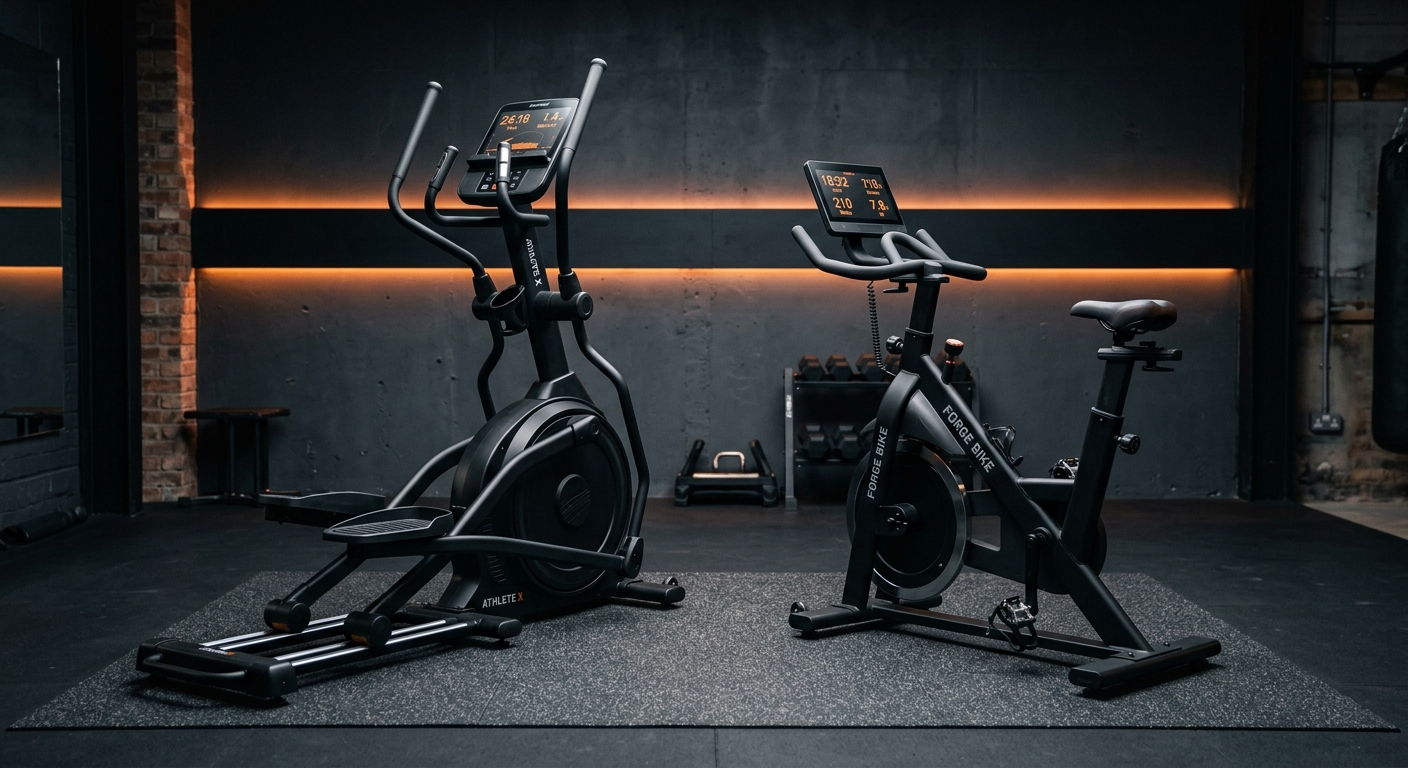
An elliptical trainer works both upper and lower body simultaneously, while a stationary bike focuses primarily on lower-body muscles like quads and hamstrings. The elliptical’s gliding motion mimics running but reduces joint impact, whereas bikes replicate cycling mechanics with adjustable resistance levels.
Elliptical trainers engage 80% of major muscle groups, including arms, core, and legs, making them ideal for full-body workouts. Stationary bikes, on the other hand, emphasize lower-body activation, with quads contributing 60% of the effort (ACE study). The elliptical’s motion also reduces knee stress to 1.5x body weight compared to 2.0x on bikes (NIH data).
Most buyers miss this: ellipticals require 8–10 sq ft of space, while bikes fit into compact areas of 4–6 sq ft. The trade-off is straightforward: ellipticals offer more muscle engagement, but bikes are quieter (50 dB vs. 60 dB) and easier to maintain.
For home gym setups, ellipticals suit users seeking full-body workouts with minimal joint strain, while bikes cater to cyclists or those prioritizing space efficiency. Explore Cardio Machines for Home Use to find the right fit.
How Do Elliptical Trainers Work for Full-Body Workouts?
Elliptical trainers engage upper and lower body simultaneously through coordinated arm and leg movements, burning 5.0 METs at moderate intensity (American College of Sports Medicine). This dual-action design activates core muscles, obliques, and glutes, making it a comprehensive cardio option.
Arm vs. leg motion resistance varies by model. Premium ellipticals allow independent adjustment of arm and leg resistance, targeting specific muscle groups. For example, increasing arm resistance boosts bicep and tricep activation by 20% (Journal of Sports Science).
Adjustable incline settings further enhance muscle engagement. A 10-degree incline increases glute activation by 15%, while a decline shifts focus to quads. This versatility makes ellipticals adaptable to diverse fitness goals, from fat loss to endurance training.
Worth knowing: ellipticals with stride lengths of 18–20 inches accommodate most users, while compact models (14–16 inches) suit shorter individuals. For a deeper comparison, check Treadmill vs. Elliptical.
Which Muscles Do Stationary Bikes Target Most?
Stationary bikes primarily target lower-body muscles, including quads, hamstrings, glutes, and calves. Upright bikes emphasize quads (70% activation), while recumbent bikes reduce strain on knees and lower back.
Calorie burn differs by bike type: upright bikes burn 500 kcal/hour vs. 400 kcal/hour on recumbent models (Harvard Health). Upright bikes also engage core muscles for balance, making them a better choice for cyclists or those seeking higher intensity.
Recumbent bikes prioritize comfort and back support, reducing lumbar strain by 30% compared to upright models. This makes them ideal for users with joint issues or limited mobility.
For a comprehensive workout, pair stationary bikes with Strength Training Equipment to balance cardio and muscle-building routines.
Is an Elliptical or Stationary Bike Better for Joint Pain?
Ellipticals are better for joint pain, as they reduce knee load to 1.5x body weight compared to 2.0x on bikes (NIH study). The elliptical’s gliding motion mimics natural walking, minimizing impact on knees, hips, and ankles.
Stationary bikes, especially recumbent models, also offer low-impact options. Recumbent bikes reduce lumbar strain by 30% and eliminate pressure on wrists and shoulders, making them suitable for users with back pain or arthritis.
The practical issue is resistance levels. Ellipticals allow users to adjust stride length and incline, customizing intensity without increasing joint stress. Bikes rely on resistance settings, which can strain knees if set too high.
For joint-friendly recovery, consider adding Recovery and Mobility Tools to your routine.
Which Burns More Calories: Elliptical or Stationary Bike?
Ellipticals burn 15% more calories than stationary bikes, averaging 335 kcal/hour vs. 260 kcal/hour for a 155 lb person (Harvard Health). The elliptical’s full-body engagement increases energy expenditure, making it more effective for weight loss.
Higher intensity settings boost calorie burn on both machines. For example, an elliptical at high resistance burns 400 kcal/hour, while an upright bike at maximum resistance burns 500 kcal/hour.
Most buyers miss this: interval training maximizes calorie burn on both machines. Alternating high and low intensity increases metabolism, burning up to 20% more calories post-workout (Journal of Obesity).
| Machine | Intensity | Calories/30 min | |
| ----------------- | ----------------- | ----------------- | |
| Elliptical | Moderate | 167 | |
| Stationary Bike | Moderate | 130 | |
| Elliptical | High | 200 | |
| Stationary Bike | High | 250 |
Who Should Choose an Elliptical Over a Stationary Bike?
Ellipticals suit users seeking full-body workouts, joint-friendly exercise, or rehabilitation (60% of physiotherapists recommend them for rehab). They’re ideal for those with knee or back pain, as they minimize joint impact while engaging multiple muscle groups.
Full-body vs. lower-body goals determine the best choice. Ellipticals activate arms, core, and legs simultaneously, making them better for overall fitness. Stationary bikes focus on lower-body endurance, appealing to cyclists or users prioritizing leg strength.
Rehabilitation needs also influence the decision. Ellipticals’ adjustable stride length and resistance accommodate users recovering from injury, while recumbent bikes offer back support for those with chronic pain.
For beginners, explore Essential Fitness Equipment for Beginners to start your fitness journey.
Bottom Line: Which Cardio Machine Fits Your Goals?
The elliptical vs stationary bike decision depends on your fitness goals, space, and joint health.
• Elliptical wins for full-body engagement and joint safety.
• Stationary bike suits cyclists or those with limited space.
• Recumbent bikes prioritize back support for users with chronic pain.
For personalized advice, visit Choosing Home Gym Equipment.