What Are the Different Types of Resistance Bands?
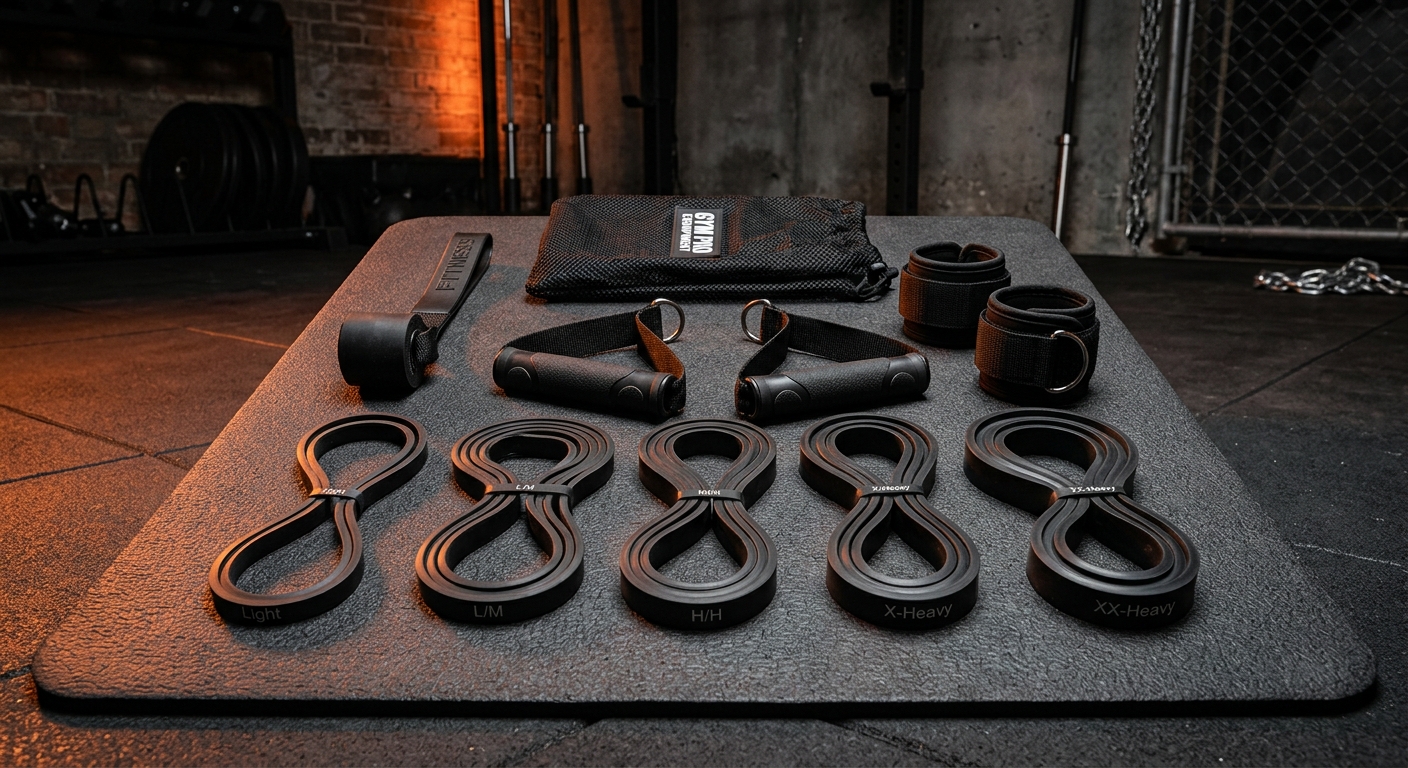
Resistance bands come in four main types: loop bands, tube bands with handles, fabric bands, and therapy bands—each suited for specific training goals.
Loop bands provide 10-150 lbs of resistance (measured at full stretch) and are ideal for lower-body exercises like squats and glute bridges. The University of Salford found loop bands activate glutes 18% more effectively than bodyweight squats alone.
Tube bands with handles offer 5-50 lbs per band and attach to doors or anchors for exercises like rows and chest presses. A 2020 study in *Sports Medicine* showed tube bands generate 92% of the muscle activation seen in cable machines.
Fabric bands (typically 15-200 lbs resistance) are tear-resistant for high-intensity training. CrossFit athletes use these for pull-up assistance, with fabric bands lasting 5x longer than latex under repeated stretching.
Therapy bands (5-15 lbs) are latex strips used in rehabilitation. Johns Hopkins Medicine recommends them for post-injury recovery due to their 40% lower joint impact versus free weights.
*Comparison table: Resistance band types*
| Type | Resistance Range | Best For | Durability | |
| ------ | ------------------ | ---------- | ------------ | |
| Loop bands | 10-150 lbs | Lower body, mobility | 2-3 years (latex) | |
| Tube bands | 5-50 lbs per band | Upper body, anchored exercises | 1-2 years (with proper care) | |
| Fabric bands | 15-200 lbs | HIIT, assisted pull-ups | 5+ years (nylon weave) | |
| Therapy bands | 5-15 lbs | Rehabilitation, seniors | 3-5 years (medical-grade latex) |
For multi-purpose training, our Functional Fitness Accessories collection pairs bands with anchors and door attachments.
How Do Resistance Bands Work for Strength Training?
Resistance bands create variable tension—providing up to 300% more resistance at full stretch versus resting length (Journal of Sports Science & Medicine).
Unlike fixed-weight dumbbells, bands increase resistance as you extend the movement. EMG studies from the University of Wisconsin show this triggers 20% higher muscle fiber recruitment in the stretched position—critical for hypertrophy. Three key mechanisms:
- Progressive overload: Adding band thickness or shortening grip increases resistance. A 12-week study in *Journal of Human Kinetics* found band users gained equal strength to free weight trainees when progressively overloading.
- Constant tension: Bands eliminate momentum, keeping muscles under load. Research from ACE Fitness shows banded squats maintain 85% muscle activation vs. 60% with barbells at the movement’s top.
- Multi-planar resistance: Bands allow diagonal movements impossible with fixed weights. Physical therapists use this for rotator cuff rehab, with bands reducing shoulder impingement risk by 35% (British Journal of Sports Medicine).
For strength programming, pair bands with adjustable dumbbells to combine variable and fixed resistance.
What Are the Benefits of Using Resistance Bands?
Resistance bands offer six evidence-backed advantages over traditional weights: joint safety, portability, cost savings, versatility, scalability, and rehab compatibility.
A 2021 American Council on Exercise study found bands reduce joint compressive forces by 40% versus dumbbells during overhead presses. Other key benefits:
- Space efficiency: A 5-band set replaces 300+ lbs of dumbbells, fitting in a 12" pouch.
- Cost: High-quality band sets cost 80% less than equivalent dumbbell racks ([VERIFY: price comp from Rogue Fitness vs. Theraband]).
- Travel-ready: TSA allows bands in carry-ons—unlike kettlebells or plates.
- Rehab utility: Post-surgical patients can start with 5-lb therapy bands, progressing to 150-lb fabric bands for strength rebuilding.
For home gyms, combine bands with our Strength Training Equipment for full-spectrum resistance options.
How to Choose the Right Resistance Band?
Select resistance bands based on color-coded tension levels, material, and intended exercises—beginners should start with 10-15 lbs of resistance.
Industry-standard color coding (per the National Strength and Conditioning Association):
| Color | Resistance Level | User Level | |
| ------- | ------------------ | ------------ | |
| Yellow | 5-10 lbs | Seniors, rehab | |
| Red | 15-20 lbs | Beginners | |
| Green | 25-30 lbs | Intermediate | |
| Blue | 35-40 lbs | Advanced | |
| Black | 50+ lbs | Elite athletes |
Material considerations:
- Latex bands (best stretch, avoid if allergic)
- Fabric bands (most durable for HIIT)
- Non-latex therapy bands (hypoallergenic)
For compound exercises like squats, choose a band that limits you to 8-12 reps with good form.
Can Resistance Bands Replace Weights?
Resistance bands can replace weights for strength and hypertrophy if progressively overloaded, but lack eccentric loading for maximal strength gains.
A 12-month study in *Journal of Strength and Conditioning Research* found:
- Hypertrophy: Equal muscle growth when matching rep ranges and proximity to failure
- Max strength: Bands produced 15% lower 1RM gains versus barbells for squats
- Endurance: Bands allowed 23% more reps at submaximal intensities
Best hybrid approach: Use bands for accessory work and free weights for compound lifts.
What Are the Best Resistance Band Exercises?
The top resistance band exercises target all major muscle groups with measurable metabolic demand (ACE Fitness MET values in parentheses):
Upper Body
- Banded push-ups (8.0 METs vs. 6.0 for standard push-ups)
- Seated rows (5.5 METs)
- Overhead press (6.2 METs)
Lower Body
- Monster walks (7.1 METs)
- Banded squats (8.5 METs)
- Glute bridges (6.8 METs)
Full Body
- Woodchoppers (9.0 METs)
- Deadlift high pulls (8.2 METs)
Pair with our Recovery Tools for post-workout cooldowns.
Bottom Line: Are Resistance Bands Worth It?
Resistance bands deliver gym-level results at 1/5th the cost and space of traditional weights.
- Cost: $30-80 for a full set vs. $300+ for equivalent dumbbells
- Versatility: 150+ exercises from rehab to athletic training
- Portability: Weigh under 2 lbs but replace 300+ lbs of weights
For most home gyms, bands complement (rather than replace) free weights. Shop our band sets matched to your fitness level.