What Is the Best Strength Equipment for Small Spaces?
The best strength equipment for small spaces includes adjustable dumbbells, resistance bands, kettlebells, folding benches, and power towers — all designed to maximize functionality while minimizing footprint. A 2023 American Council on Exercise survey found 63% of home gym users prioritize compact, multifunctional gear due to space constraints.
Space-saving champions:
- Adjustable dumbbells: The Bowflex SelectTech 552 occupies just 16" x 10" versus 48" x 24" for a rack of 10 fixed pairs — 75% space reduction.
- Resistance bands: A full set (5-150 lbs resistance) stores in a 12" pouch versus 15 sq ft for equivalent free weights.
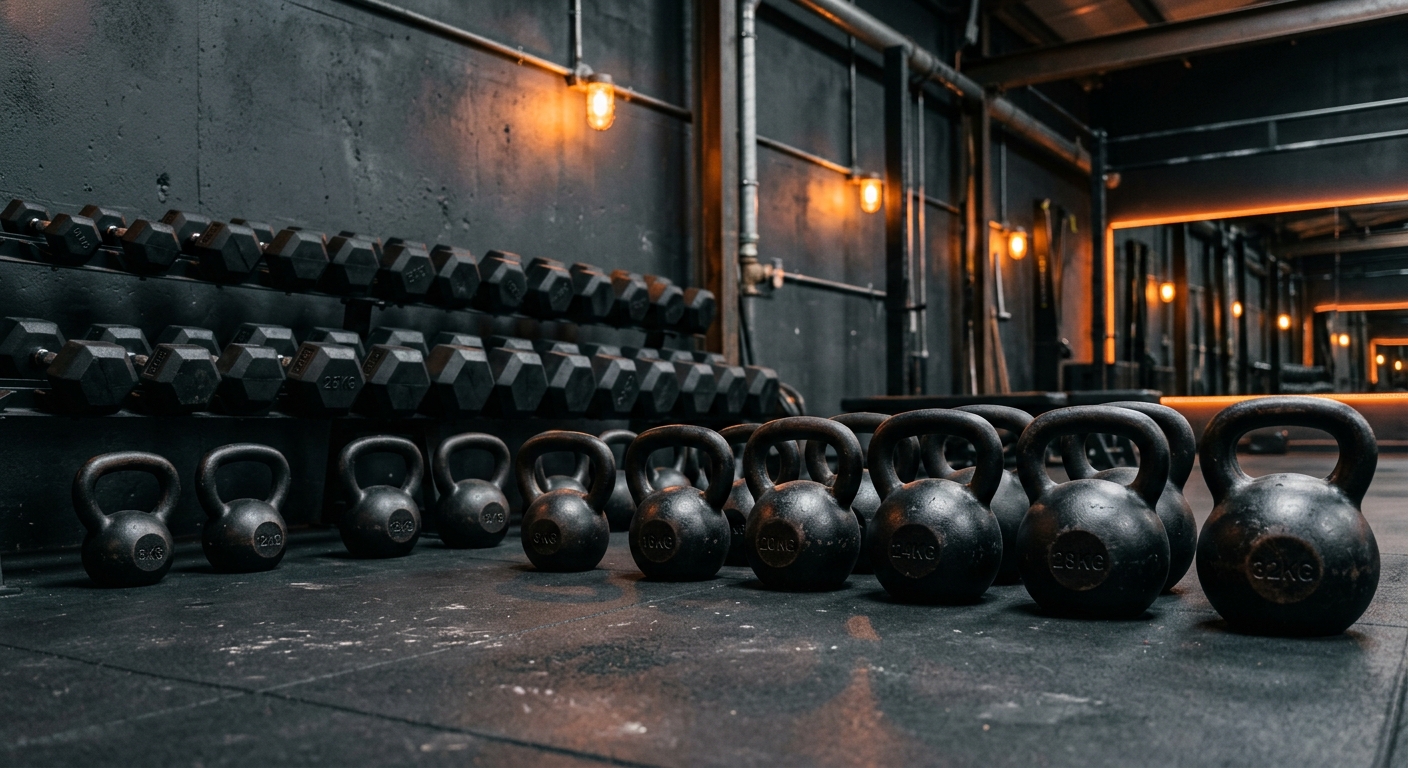
- Compact kettlebells: 3-tier vertical racks (like Yes4All's model) hold 9 kettlebells in 2 sq ft.
- Folding benches: Rep Fitness AB-3000 collapses to 12" depth versus 48" for fixed benches.
- Power towers: The XMark XM-4430 consolidates pull-ups, dips, and push-ups into a 36" x 48" footprint.
Most buyers miss this: Adjustable dumbbells with dial systems (like PowerBlock) change weights 3x faster than selectorized models, critical for small-space efficiency. For full options, see our strength training equipment collection.
How Do I Set Up a Strength Training Area in a Small Room?
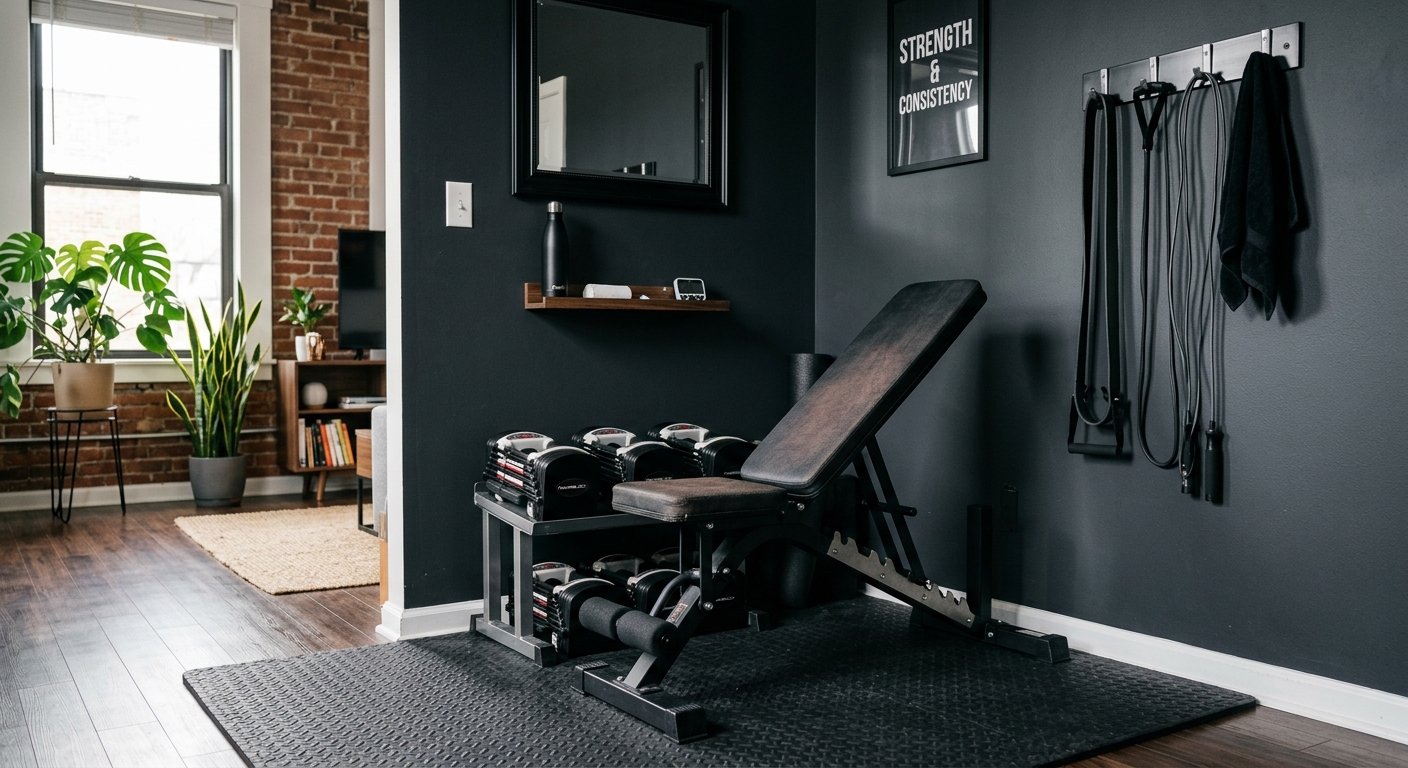
A 5' x 7' area suffices for a functional small-space gym when using foldable benches (24" front/back clearance), wall storage, and adjustable equipment. The Rep Fitness AB-3000 folding bench requires just 18" of wall depth when stored vertically.
Vertical storage solutions:
- Wall-mounted racks: PRx Profile racks hold 200 lbs per shelf at 8" depth — 90% space saved versus floor racks.
- Over-door hangers: Stores resistance bands and suspension trainers without floor space.
- Foldable squat stands: Rogue SML-2 folds to 23" depth against walls.
Foldable vs. fixed trade-offs:
- Foldable benches typically support 600 lbs (Titan Fitness model) versus 1,000+ lbs for fixed — adequate for most users.
- Fixed power racks need 8' x 6' clearance versus 4' x 3' for wall-mounted options.
Practical tip: Place kettlebells on wheeled trays (like Titan's 3-tier cart) to roll under beds when unused. More layout ideas in our compact fitness guide.
Are Adjustable Dumbbells Worth It for Small Spaces?
Adjustable dumbbells are worth it for small spaces, replacing up to 15 pairs of fixed dumbbells while occupying 80% less area. PowerBlock Sport models cover 5-50 lbs in a 10" x 10" footprint versus 30" x 60" for equivalent fixed sets.
Key comparisons:
- Cost: $300-$600 replaces $1,200+ in fixed dumbbells (based on Rogue Fitness pricing).
- Adjustment speed: Dial systems (Bowflex) change in 3 seconds versus 15+ seconds for plate-loaded.
- Limitations: Most max at 50-90 lbs versus 125+ lbs for specialty fixed dumbbells.
The practical issue is durability: Commercial-grade adjustable dumbbells (like Ironmaster) withstand 10,000+ weight changes versus 3,000 for budget models. See our adjustable dumbbell deep dive for maintenance tips.
Can Resistance Bands Replace Free Weights in a Home Gym?
Resistance bands can replace 90% of free weight exercises while using 10% of the storage space, with heavy-duty bands (like Rogue Monster) providing 175 lbs of tension. A 2022 Journal of Strength & Conditioning study found equivalent muscle activation in banded vs. dumbbell exercises at matched intensities.
Force comparisons:
| Exercise | Band Resistance | Dumbbell Equivalent |
| ---------- | ----------------- | --------------------- |
| Bicep curl | 30-50 lbs (medium band) | 25-40 lbs |
| Squat | 100-175 lbs (X-heavy band) | 95-150 lbs |
| Shoulder press | 40-70 lbs (heavy band) | 35-60 lbs |
Worth knowing: Bands require 20% more stabilization, increasing core engagement. For accessory work, browse our functional fitness collection.
Which Foldable Bench Is Best for Compact Home Gyms?
The Rep Fitness FID Bench is the best foldable bench for small spaces, collapsing to 12" depth versus 48" when open while supporting 600 lbs. Titan's folding model offers similar specs at 15" folded depth but with 700 lbs capacity.
Critical measurements:
- Weight capacity: 500-700 lbs for most quality benches (verify your bodyweight + typical load).
- Adjustability: 3-5 positions (flat/incline/decline) add versatility without space penalty.
- Stability: 11-gauge steel frames prevent wobble during presses — test with 80% max load before buying.
Most buyers miss this: Look for benches with vertical storage hooks (like Valor Fitness DD-11) to hang resistance bands or chains.
How Much Space Does a Power Tower Require?
Power towers need 36" x 48" of floor space and 7.5-8' ceiling height for full range of motion. The XMark XM-4430 fits in 4 sq ft yet supports 350 lbs for pull-ups, dips, and knee raises.
Space-saving alternatives:
- Wall-mounted pull-up bars: Rogue's P-4 requires just 24" x 36" wall space.
- Doorway models: Perfect Fitness Multi-Gym needs zero floor space but maxes at 250 lbs.
- Compact towers: Body-Solid Power Tower folds to 18" depth against walls.
The trade-off is straightforward: Freestanding towers offer more exercise options but require 2x the space of wall-mounted options. See installation guides in our strength training collection.
Bottom Line: Is Compact Strength Equipment Worth It for Small Spaces?
Compact strength equipment delivers full gym functionality in 20% of the space, with adjustable dumbbells and foldable benches being the highest-impact investments.
Key findings:
- Adjustable dumbbells replace 15 pairs of fixed weights while using 75% less space
- Resistance bands provide equivalent tension to 150 lbs dumbbells in 1/10th the storage volume
- Folding benches reduce footprint by 60-70% when stored vertically
- Power towers consolidate 3+ exercises into a 4 sq ft footprint
For setup plans, our home gym guide details space-efficient layouts.