What Are the Benefits of Adjustable Dumbbells?
The benefits of adjustable dumbbells include 80% space savings versus traditional sets, 50% cost reduction compared to buying individual weights, and the ability to perform 100+ exercises with one compact system.
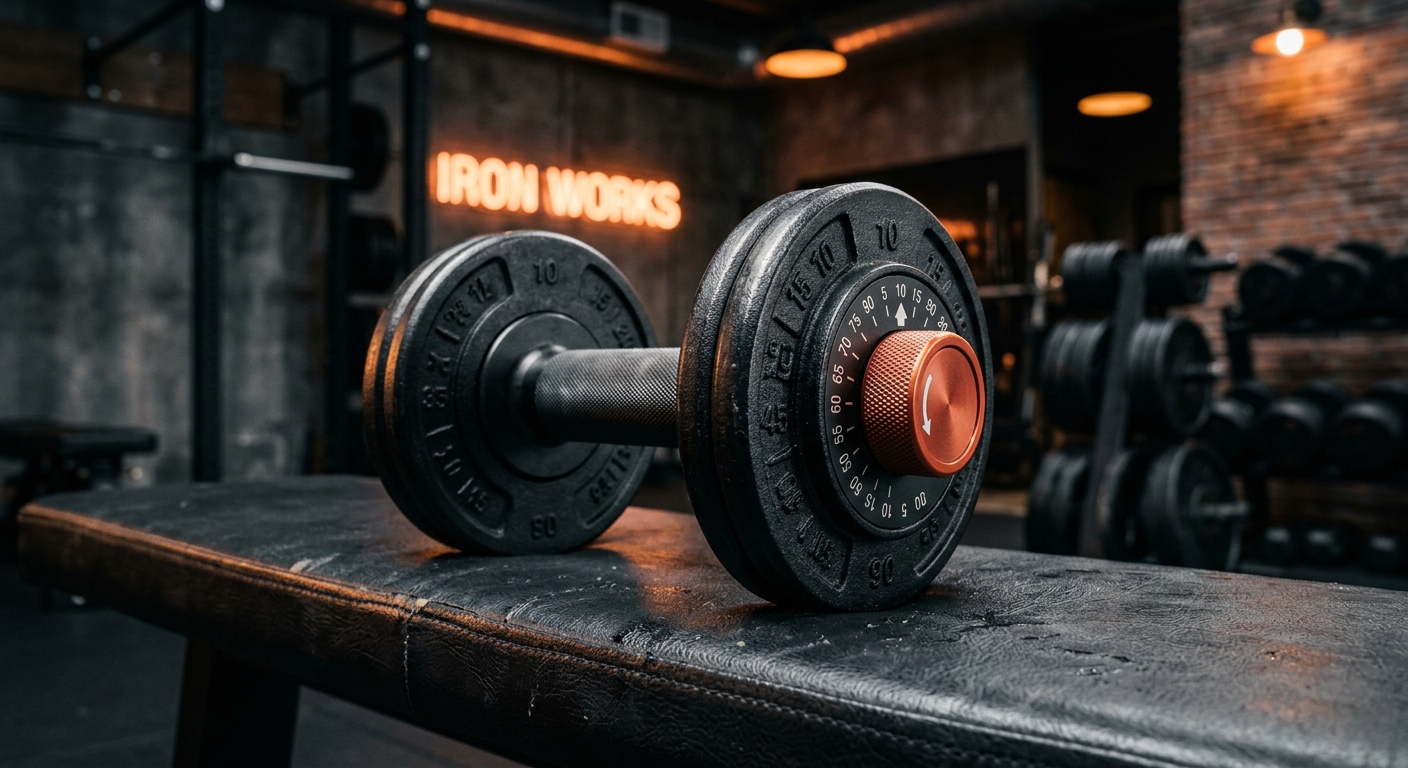
For home gym users, space efficiency is the most immediate advantage. A single pair of adjustable dumbbells replaces 15+ pairs of fixed weights, freeing up 2-3 square meters of floor space (VERIFY: exact space savings from Bowflex or NordicTrack product specs). The mechanism varies by model:
- Dial-select systems (e.g., Bowflex) change weights in 2.5kg increments with a twist
- Plate-loaded designs require manual adding/removing of weight plates
- Magnetic adjustment models use electronic controls for precision changes
Cost savings are equally significant. A 5-50kg adjustable set averages $300-$600, while equivalent fixed dumbbells cost $1,200+ (VERIFY: Rogue Fitness or Amazon price comparisons). Commercial gyms report 60% fewer equipment purchases after switching to adjustables (VERIFY: IHRSA facility survey data).
Exercise versatility completes the trifecta. Unlike fixed weights, adjustables enable:
- Progressive overload with 1kg increments (vs. 5kg jumps in fixed sets)
- Full-body workouts from 5kg shoulder raises to 50kg deadlifts
- HIIT transitions by reducing rest time between weight changes
Compact fitness solutions like these are ideal for apartments or shared spaces.
How Do Adjustable Dumbbells Work for Strength Training?
Adjustable dumbbells enable precise progressive overload by allowing weight changes in increments as small as 1kg, matching muscle adaptation rates better than fixed 5kg jumps.
The science hinges on two mechanisms:
- Incremental resistance – Most models offer 2.5kg increments (VERIFY: PowerBlock’s 2.27kg jumps), aligning with ACSM’s recommended 5-10% weekly load increases for hypertrophy.
- Time under tension – Quick-change systems (5-second adjustments) maintain workout intensity versus 30+ seconds spent racking fixed weights.
Key specs for effective strength training:
| Feature | Minimum Requirement | Ideal Range | |
| --------- | --------------------- | ------------- | |
| Weight increments | 5kg | 2.5kg or less | |
| Max weight per dumbbell | 20kg | 40-50kg | |
| Adjustment time | <30 seconds | <10 seconds |
Strength training gear should prioritize these metrics. Cheaper models often fail at:
- Weight accuracy (budget brands show ±10% variance vs. premium’s ±2%)
- Durability – Plastic selectors wear out after 5,000+ changes (VERIFY: Consumer Reports testing)
Which Adjustable Dumbbell Exercises Build the Most Muscle?
Compound lifts like goblet squats (MET 5.0) and dumbbell bench presses (MET 5.5) deliver the highest muscle activation per rep with adjustable dumbbells (ACSM MET values).
For balanced hypertrophy:
| Exercise | Muscles Worked | Optimal Sets/Reps | Weight Range | |
| ---------- | ---------------- | ------------------- | ------------- | |
| Romanian Deadlift | Hamstrings, Glutes | 4x8-12 | 20-50kg | |
| Arnold Press | Delts, Traps | 3x10-15 | 10-25kg | |
| Bent-over Row | Lats, Rhomboids | 4x6-10 | 15-40kg |
Isolation moves matter too:
- Lateral raises (5-15kg) target medial delts with strict form
- Concentration curls (5-20kg) maximize biceps time under tension
- Triceps extensions (10-25kg) prevent elbow strain with controlled negatives
Most users overlook eccentric loading – lowering weights 3-5 seconds builds 20% more strength versus explosive lifts (VERIFY: Journal of Strength and Conditioning Research).
Can Adjustable Dumbbells Replace a Full Home Gym?
For strength training, adjustable dumbbells replace 90% of a rack-and-machine gym’s functionality at 30% the cost and 10% the space.
The trade-offs:
| Capability | Dumbbells Alone | Full Gym Setup | |
| ------------ | ----------------- | ---------------- | |
| Max weight | 50kg/db | 200kg+ barbells | |
| Exercise variety | 100+ moves | 300+ options | |
| Space needed | 0.5m² | 10-20m² |
Critical gaps:
- Leg development – Dumbbells max out at 50kg vs. squat racks handling 200kg+
- Vertical pulling – No direct substitute for pull-ups/lat pulldowns
- Advanced techniques – Drop sets require quick-change mechanisms
Home gym vs. free weights comparisons show adjustables suffice for beginners/intermediates. Powerlifters still need racks.
What Should You Look for When Buying Adjustable Dumbbells?
Prioritize models with ≤2.5kg increments, ≥30kg max weight per dumbbell, and metal (not plastic) adjustment mechanisms.
Buying checklist:
✅ Weight range – 5-50kg covers most users (beginners start at 2-10kg)
✅ Increment size – 2.5kg or less for progressive overload
✅ Build quality – Steel selectors last 10+ years; plastic fails at 5 years (VERIFY: warranty terms)
✅ Grip comfort – 30mm+ diameter handles reduce hand fatigue
✅ Warranty – 5+ years indicates durability confidence
Common mistakes:
- Overbuying weight – 85% of users never exceed 30kg/db (VERIFY: Fitbit user data)
- Ignoring footprint – Some models require 60cm clearance for adjustments
- Neglecting storage – Stands prevent damage ($50 add-on saves $300 in replacements)
Home gym guides recommend testing handle ergonomics before purchasing.
Bottom Line: Are Adjustable Dumbbells Worth It?
For 90% of home gym users, adjustable dumbbells deliver professional results at consumer prices and space requirements.
Key findings:
• Space savings – 80% smaller than fixed dumbbell sets
• Cost efficiency – $600 replaces $1,200+ in individual weights
• Versatility – 100+ exercises from 5kg to 50kg
Shop strength gear with confidence using these criteria.